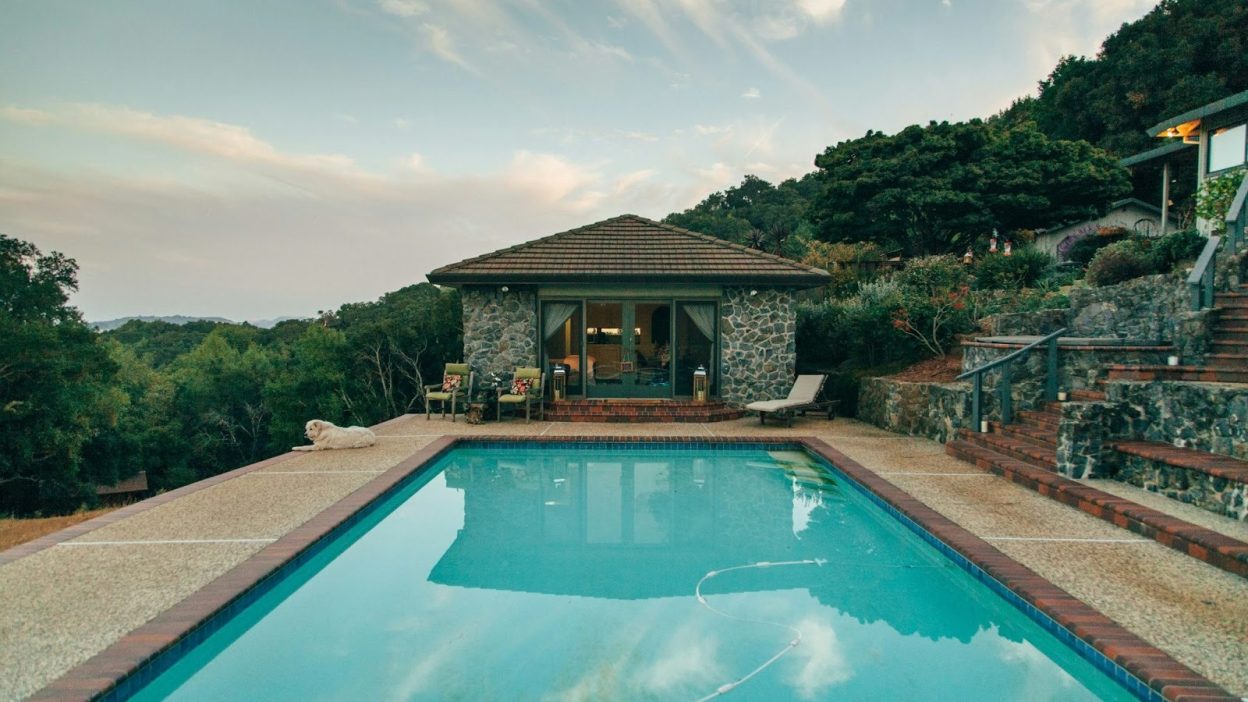
Most homeowners spend months planning the perfect pool, choosing the right shape, tile, and water features, yet leave the surrounding deck as an afterthought when the sun goes down. The result is a beautiful space that becomes unusable, and even unsafe, after dark. The right pool deck lighting ideas in Nashville, TN can completely transform how you use your outdoor space, extending swim season by several hours every evening and turning a daytime amenity into a genuine backyard resort experience. If you are exploring custom pool design and installation, a well-planned lighting strategy should be part of that conversation from day one.
Thoughtful outdoor lighting does more than add visual appeal. It creates clearly defined pathways, highlights architectural details, delineates depth changes around the pool edge, and sets the mood for entertaining. This guide breaks down the most effective lighting types, explains how to layer them intelligently, and shows you how to keep energy costs reasonable without sacrificing the effect.
Why Most Pool Decks Are Underlit
The typical approach is to install a single in-pool light and maybe a porch light near the back door. While this technically provides some illumination, it creates harsh shadows, leaves steps and edges dark, and does nothing for the surrounding landscape. According to the Illuminating Engineering Society, outdoor safety lighting should provide consistent, even coverage across all transition areas, including steps, ramps, and grade changes.
An underlit pool deck creates multiple problems. Guests misjudge the pool edge. Children running from the house to the water encounter dark patches. The pool itself may glow brilliantly while the path leading to it remains invisible. A layered lighting plan solves all of these issues simultaneously.
Understanding the Three Core Lighting Categories
1. In-Pool Lights
In-pool lights are submersible fixtures installed directly into the pool shell during construction or added through retrofit niches later. Modern LED in-pool lights offer a wide range of color temperatures and color-changing capabilities through smart controls. A single warm white LED pool light consumes far less electricity than older halogen options while producing comparable or superior brightness.
Color-changing RGB pool lights have become a popular choice for entertainment-focused yards. With the right controller, you can shift the water from a cool blue for evening swims to a warm amber tone during parties. The U.S. Department of Energy notes that LED fixtures use at least 75 percent less energy than incandescent lighting and last up to 25 times longer, making them the practical and economical choice for in-pool installations.
Best used for: Creating a focal point, illuminating swimming areas for safety, and setting overall mood.
2. Recessed Deck Lights
Recessed deck lights, also called in-deck or hardscape lights, are installed flush with the pool deck surface. They sit at or just below grade level and cast light upward and outward across the deck. These fixtures are especially valuable around steps, along the perimeter of the deck, and near water features like raised walls or spillways.
Because they are mounted in the deck itself, recessed lights are far less likely to be tripped over or damaged by foot traffic. They define edges clearly without requiring overhead fixtures that can produce glare. Most modern recessed deck lights use low-voltage LED technology and connect to a standard 12-volt landscape lighting transformer, making installation and energy management straightforward.
Best used for: Step lighting, edge definition, pathway marking, and accent lighting along walls or planters.
3. Landscape Uplighting
Landscape uplighting involves placing fixtures at ground level aimed upward at trees, shrubs, pergolas, fences, or architectural features surrounding the pool area. While uplighting does not illuminate the deck surface directly, it adds crucial depth and dimension to the space. A well-uplit tree canopy over the pool area creates a canopy effect that feels genuinely resort-like.
Uplighting is also the most flexible of the three categories. Fixtures can be repositioned as your landscape matures, aimed at seasonal plantings, or angled to highlight new hardscape additions. Many homeowners overlook this layer entirely, which is why their outdoor space feels flat and incomplete even when the deck and pool are well lit.
Best used for: Creating ambiance, highlighting landscape features, softening the transition between pool deck and surrounding yard.
When to Combine All Three
The most effective pool deck lighting plans use all three categories working together. Think of it as a zone system. The pool itself anchors the space with in-water light. The deck surface is defined by recessed fixtures along edges and steps. The surrounding landscape is brought to life with uplighting on trees, hedges, and architectural elements.
When these three zones are balanced in intensity, the eye moves naturally through the space without harsh contrasts or dark pockets. The result feels cohesive rather than pieced together. Outdoor lighting designers often refer to this as layering, the same principle used in interior design to avoid relying on a single overhead fixture.
Low-Voltage and Solar Options for Energy Efficiency
One of the most common concerns homeowners raise about outdoor lighting is electricity cost. Running multiple fixtures across a large pool deck can add up if the system is poorly designed. Fortunately, low-voltage landscape lighting systems operating at 12 volts rather than the standard 120-volt household current are the default choice for most modern outdoor installations.
A low-voltage transformer connects to a standard outdoor outlet and steps down the current before distributing it to your fixtures. These transformers typically include built-in timers and photocell sensors that turn the system on at dusk and off at dawn or at a preset time. This automation alone prevents the waste of lights running unnecessarily through the night.
Solar-powered fixtures have improved dramatically in recent years. While they are not powerful enough to replace hardwired recessed deck lights or in-pool fixtures, solar path lights and solar stake uplights work well in secondary areas like garden borders, along fences, and in low-traffic zones. They require no wiring and cost nothing to operate after purchase. The limitation is that their brightness depends on sun exposure during the day, making them unreliable in heavily shaded areas.
For a comprehensive pool deck, the practical approach is a hybrid system: hardwired low-voltage LED fixtures for the primary deck, steps, and pool perimeter, supplemented by solar fixtures in the outer landscape zones where reliability is less critical.
The Energy Star program provides guidelines and certified product lists for energy-efficient outdoor fixtures, which is a useful resource when comparing options before purchasing.
Layering Lighting Zones for Entertaining and Child Safety
Planning lighting zones requires thinking about how the space is actually used. A pool deck typically has several distinct activity areas: the water itself, the immediate pool surround, transition steps, a seating or dining area, and pathways leading to the house and yard.
Zone 1: The Water. One or two in-pool LED lights provide the primary focal point. For larger pools, multiple fixtures spaced evenly prevent dark corners in the water.
Zone 2: Pool Edge and Steps. Recessed deck lights placed every four to six feet along the pool coping and at every step change create the clearest safety boundary. This zone is non-negotiable for families with young children. A child or adult who stumbles at the pool edge needs to be able to see exactly where that edge is in every direction.
Zone 3: Deck Surface and Seating Area. A combination of low-profile recessed lights and, optionally, string lights or pendant fixtures over a pergola or shade sail creates the entertainment zone. String lights on a pergola add warmth and height to the space without requiring complex wiring.
Zone 4: Pathways and Transitions. The path from the house to the pool, the gate latch, and any grade changes in the yard should all be independently lit. Path lights or bollard lights spaced along walkways eliminate the dark corridor between interior and exterior spaces.
Zone 5: Surrounding Landscape. Uplighting activates the perimeter and makes the entire yard feel finished. Even three or four well-placed uplights can transform how a space reads at night.
For families with children, the American Academy of Pediatrics recommends multiple layers of pool safety barriers, and adequate lighting is a key component of that strategy. Being able to clearly see the pool and its surroundings from the house at night allows parents to monitor activity more effectively.
Smart Controls and Automation
Modern low-voltage lighting systems pair with smartphone-controlled hubs that allow you to program scenes, adjust brightness, and change color temperatures from an app. This is particularly useful for pools used both for family evenings and adult entertaining, where you might want bright, cool light for active swim time and dim, warm tones for a later gathering.
Timer-based and motion-triggered options add another layer of practicality. Motion-activated pathway lights conserve energy while still illuminating the route from house to pool whenever someone walks that path after dark.
Wrapping Up: The Value of a Thoughtful Lighting Plan
Lighting as a Long-Term Investment
A well-executed pool deck lighting plan is one of the most cost-effective ways to increase the functional hours you get from your outdoor investment. The pool you spent months planning and significant resources building should be enjoyable from the moment the sun dips below the fence line, not something you retreat indoors from. Layering in-pool lights, recessed deck fixtures, and landscape uplighting creates a space that is simultaneously safer, more beautiful, and more versatile.
Energy-efficient LED and low-voltage systems mean that running your lighting every evening adds very little to your utility bill. Smart controls let you customize the experience for different occasions without any manual adjustment. And the safety benefits, particularly for families with children, are simply not achievable through any other means.
If you are working with a Nashville outdoor living contractor to design or renovate a pool area, raise the lighting plan in the early design phase. Conduit, niches, and transformer locations are far easier to incorporate during construction than to retrofit afterward. The result is a finished space that genuinely functions as the backyard resort it was always meant to be.
Frequently Asked Questions
Q1: How many in-pool lights do I need for a standard backyard pool?
For a typical residential pool in the 400 to 600 square foot range, one to two in-pool lights is usually sufficient for safety and ambiance. Larger or irregularly shaped pools may benefit from three or more fixtures to prevent dark corners. Your pool contractor can calculate the appropriate number based on pool dimensions and desired brightness levels.
Q2: Are low-voltage landscape lights bright enough for safety around the pool?
Yes. Modern low-voltage LED fixtures produce excellent brightness at 12 volts. The key is fixture placement rather than voltage. Recessed step lights, edge lights placed every four to six feet along the pool perimeter, and pathway lights along all walkways provide consistent coverage that meets safety standards without the glare of line-voltage fixtures.
Q3: Can I add lighting to an existing pool deck without major renovation?
In many cases, yes. Recessed deck lights can sometimes be retrofitted into existing hardscape depending on the deck material and substrate. Landscape uplights require only a trench for low-voltage wire. In-pool light retrofits require a compatible niche. A licensed outdoor lighting professional can assess your existing deck and recommend what is feasible without full reconstruction.
Q4: What is the best color temperature for pool deck lighting?
For safety and pathway lighting, a neutral white in the 3000K to 4000K range provides clear visibility without feeling clinical. For ambiance in seating areas, a warmer tone around 2700K creates a more inviting atmosphere. In-pool lights with color-changing capability give you the flexibility to adjust based on the occasion.
Q5: How do I protect outdoor lighting fixtures from pool water and chemicals?
In-pool lights are specifically rated for submersible use and designed to withstand pool chemicals. Deck and landscape fixtures should carry an IP65 or higher rating, which indicates resistance to water jets and dust. Avoid placing standard landscape fixtures in splash zones directly adjacent to the pool. When in doubt, consult the manufacturer’s installation guidelines or work with a licensed electrician familiar with outdoor and aquatic environments.