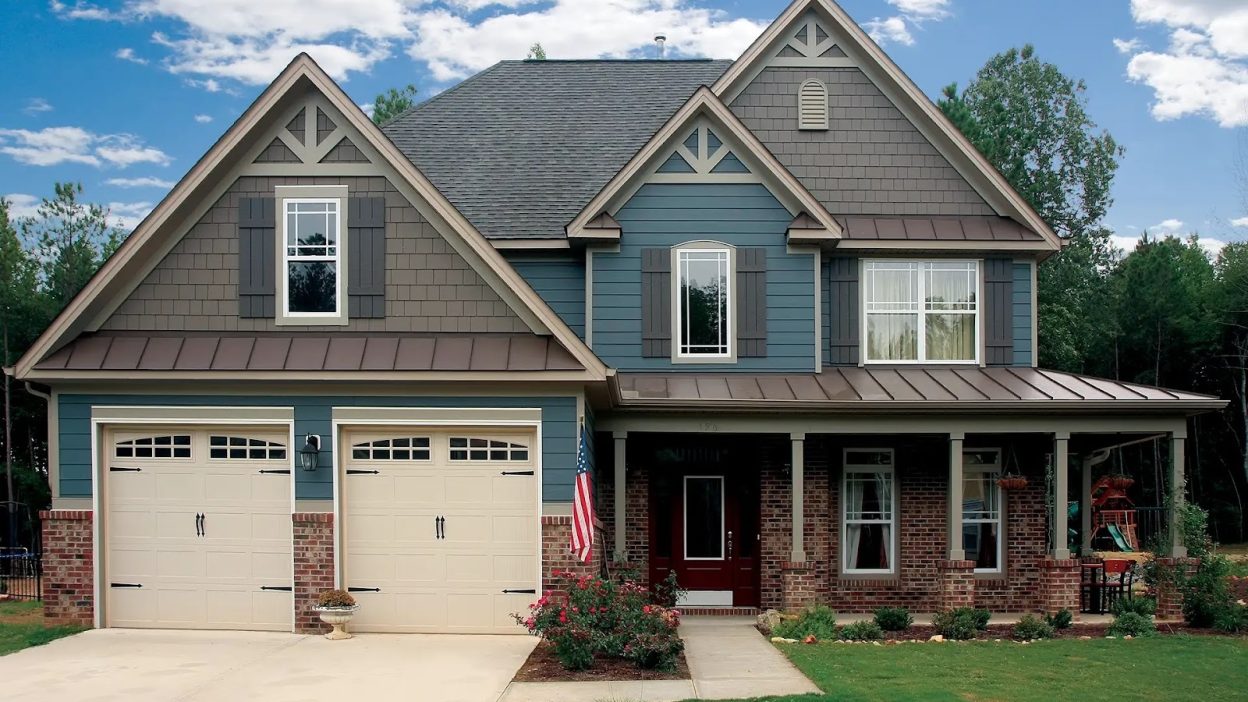
When Cincinnati homeowners start researching exterior siding, the comparison of vinyl siding vs James Hardie fiber cement comes up almost immediately. Both materials dominate the market across Warren County and the greater Cincinnati region, and both have legitimate arguments in their favor. If you are weighing your options before reaching out to a siding contractor, this guide will walk you through the real differences so you can make a confident, informed decision for your specific home and budget.
Ohio’s climate adds a layer of complexity to this decision that generic national guides often overlook. Cincinnati sits in a region that experiences genuine freeze-thaw cycling every winter, humid summers, and occasional severe storms. How each material responds to those conditions over decades is what separates a smart investment from an expensive regret.
Understanding the Two Materials
Vinyl siding is made from polyvinyl chloride (PVC). It has been the most commonly installed siding material in the United States for decades, largely because of its low upfront cost and minimal maintenance requirements. Modern vinyl products have improved significantly, offering thicker profiles, better insulation backing options, and a wider range of color choices than earlier generations.
James Hardie fiber cement is a composite material made from cement, sand, and cellulose fiber. James Hardie is the dominant brand in this category, holding the largest share of the fiber cement siding market in North America. Their products are engineered to resist moisture, fire, and impact at a level that vinyl cannot match. The company also offers a regionally specific product line called HardieZone, which formulates boards specifically for climate zones like the Midwest.
Lifespan and How Ohio Weather Shifts the Math
Vinyl siding carries a general lifespan estimate of 20 to 40 years under normal conditions. Fiber cement, including James Hardie products, is rated at 30 to 50 years when properly maintained.
Those ranges look straightforward on paper, but Cincinnati’s freeze-thaw cycles complicate the picture for vinyl. When temperatures repeatedly drop below freezing and rise again, vinyl contracts and expands. Over time, this thermal movement can cause seams to gap, panels to warp, and in older or thinner products, cracking can occur along impact points. This does not mean vinyl fails quickly in Ohio, but it does mean that panel thickness and installation quality matter more here than they would in a mild coastal climate.
Fiber cement handles temperature swings more predictably. Because it is denser and dimensionally stable, it does not flex the same way under thermal stress. The HardieZone system, specifically the HZ5 formulation used in Midwest climates, is engineered to resist the specific moisture and freeze-thaw patterns of the region. James Hardie’s own technical documentation describes how fiber cement’s inorganic composition resists rot, moisture infiltration, and insect damage in ways that PVC cannot replicate.
What this means for Cincinnati homeowners: If your home is in a shaded location, faces north, or is surrounded by mature trees that keep exterior walls damp, fiber cement’s resistance to moisture and biological growth gives it a meaningful durability edge. If your home is in a newer subdivision with good sun exposure and you plan to sell within 15 years, vinyl may perform perfectly well throughout your ownership period.
Upfront Cost vs. Long-Term Cost
This is where the conversation gets nuanced, and where many comparison guides oversimplify.
Vinyl siding typically costs between $4 and $9 per square foot installed in the Cincinnati market, depending on panel thickness, profile, and insulated backing options. It requires no painting. Routine maintenance is limited to periodic cleaning with a garden hose or low-pressure washer. If a panel is damaged, individual panels can often be replaced without disturbing the surrounding installation.
James Hardie fiber cement typically costs between $8 and $14 per square foot installed in the same market. The higher price reflects both the material cost and the more demanding installation process. Fiber cement is heavy, requires specialty cutting equipment, and takes longer to install correctly. James Hardie also requires certified installers to maintain warranty coverage, which affects contractor selection.
The long-term cost picture changes when you factor in repainting. Hardie products come pre-primed or factory-finished in James Hardie’s ColorPlus Technology, but the painted finish will need to be refreshed every 10 to 15 years. A full exterior repaint on a typical Cincinnati home can run between $3,000 and $8,000 depending on square footage, surface prep, and paint quality. This is a recurring cost that vinyl simply does not have.
Over a 30-year ownership period, that repainting cost can partially or fully close the gap between vinyl’s lower upfront price and Hardie’s higher initial investment. Homeowners planning to stay in their home for 25 or more years should build repainting cycles into their total cost of ownership calculation.
On the other hand, if vinyl panels are damaged by impact (hail, windblown debris), color fading becomes an issue because mismatched replacement panels are difficult to source for discontinued product lines. Fiber cement, once repainted, looks completely uniform.
For a deeper breakdown of siding material costs and return on investment, the Remodeling Magazine Cost vs. Value Report provides annual data on midrange and upscale siding projects across U.S. regions.
Durability Against Ohio-Specific Threats
Beyond freeze-thaw performance, Cincinnati homeowners face several other climate factors worth evaluating.
Hail and impact resistance: Southwest Ohio sits in a hail corridor that sees meaningful storm activity from spring through fall. Fiber cement resists hail damage significantly better than standard vinyl. Premium thicker-gauge vinyl products have improved in this regard, but fiber cement’s density still provides a measurable advantage. Impact damage to vinyl often requires panel replacement, while fiber cement typically shows less visible damage from the same event.
Wind resistance: Both materials handle Ohio wind speeds well when properly installed. Fiber cement is heavier and less susceptible to uplift, while vinyl relies more on correct nailing patterns and adequate overlap.
Fire resistance: Fiber cement is noncombustible, which gives it a clear advantage over vinyl, which melts and can contribute to fire spread. This is relevant for insurance purposes and homes with close neighboring structures.
Moisture and rot: Both materials resist rot at their core, but improperly installed fiber cement that traps moisture can degrade over time. Cut edges must be sealed and painted. Vinyl is somewhat more forgiving of installation imperfections from a moisture standpoint.
Resale Value: What Warren County Buyers and Appraisers Respond To
The resale question carries strong regional variation. In Warren County and the broader Cincinnati market, buyer preferences lean toward materials that signal quality and longevity.
Fiber cement siding, and James Hardie in particular, has strong brand recognition among buyers who have researched their options. Listing agents in this market frequently highlight “James Hardie siding” in property descriptions because it functions as a quality signal. Appraisers generally assign higher replacement cost values to fiber cement, supporting appraisal outcomes in sales and refinancing scenarios.
Premium vinyl products in good condition do not dramatically underperform on resale compared to fiber cement. The gap narrows when vinyl is well-maintained. The largest resale disadvantage for vinyl appears when it shows fading, warping, or impact damage, because buyers mentally discount for future replacement.
According to the Remodeling Magazine Cost vs. Value Report, fiber cement siding projects recover a higher percentage of project cost at resale than vinyl siding on a national average, and this directional trend holds in most Midwest markets.
Installation Considerations for Cincinnati Homeowners
Fiber cement installation is more demanding, requires specific training, and should be performed by James Hardie certified contractors. Poor installation, particularly failure to properly flash windows, seal cut edges, or maintain clearance from grade, can accelerate moisture issues that undermine the material’s otherwise strong performance.
Vinyl installation is more forgiving and can be completed by a wider range of contractors, but improperly tight nailing is a common error that leads to buckling and warping as temperatures change.
In both cases, installation quality matters as much as material quality. You can check local contractor reviews and business legitimacy through the Better Business Bureau’s Cincinnati regional directory before committing to an installer.
Wrapping Up the Vinyl vs. Hardie Decision
Choosing between vinyl siding and James Hardie fiber cement comes down to how you weigh upfront cost against long-term performance, how long you plan to stay in your home, and how Cincinnati’s climate applies to your specific property.
Vinyl remains an excellent choice for homeowners with tighter budgets, shorter expected ownership timelines, or homes where the durability gap between the two materials is less significant. No painting, easy panel replacement, and reliable performance through Ohio winters make it a practical option.
James Hardie fiber cement earns its premium through superior durability, better resale positioning, and stronger resistance to hail, fire, and moisture. The repainting commitment is real and should be budgeted for honestly, but for homeowners planning to stay 20 or more years, the long-term math often favors Hardie.
A qualified local contractor who installs both products and can assess your specific home is your best resource for making the final call. You can find local siding professionals in the Cincinnati area through Google Maps to compare options and read verified reviews.
Frequently Asked Questions
1. How long does James Hardie siding last in Cincinnati’s climate?
James Hardie fiber cement is rated for 30 to 50 years. In Cincinnati, proper installation with sealed cut edges and adequate clearance from soil is critical to achieving that lifespan. The HZ5 formulation is specifically engineered for Midwest freeze-thaw cycles.
2. Does vinyl siding crack in Ohio winters?
Thinner vinyl panels can become brittle in very cold temperatures and are more susceptible to impact cracking during winter. Premium thick-wall vinyl handles cold better. Thermal cycling over years can also cause seams to gap if installation did not allow adequate movement tolerance.
3. Is James Hardie worth the extra cost over vinyl in the Cincinnati area?
For homeowners planning to stay 20 or more years, James Hardie often delivers better long-term value when accounting for its longer lifespan, stronger resale positioning, and superior hail and moisture resistance. For shorter timelines or tighter budgets, quality vinyl is a smart and practical choice.
4. How often does James Hardie siding need to be repainted?
James Hardie’s factory ColorPlus finish carries a 15-year fade and chalk warranty. Most Cincinnati homeowners plan for a full repaint every 10 to 15 years. Budget $3,000 to $8,000 per cycle depending on home size and prep work required.
5. Which siding material is better for resale value in Warren County?
Fiber cement, and James Hardie specifically, tends to receive stronger buyer recognition and higher appraised replacement costs in the Warren County market. Well-maintained vinyl narrows this gap, but fiber cement holds a general resale advantage in the current regional market.
6. Can the same contractor install both vinyl and James Hardie siding?
Many siding contractors install both products, but James Hardie requires certified installers to maintain the product warranty. Confirm James Hardie certification status when selecting a contractor for fiber cement installation.