When your vehicle is involved in a collision, one of the most consequential decisions you face has nothing to do with choosing a body shop. It has to do with the parts that go into your repaired vehicle. The debate around OEM vs aftermarket collision parts in Cincinnati, OH affects everything from how well your bumper fits to how accurately your paint color gets matched. Before signing off on a repair estimate, understanding the difference between these two categories of parts can save you from costly surprises later.
One area where this choice becomes especially critical is during computerized paint matching, a process that depends heavily on the dimensional accuracy of the replacement panel. A poorly fitting aftermarket part can throw off even the most advanced color-matching technology, leaving a repair that looks noticeably off in certain lighting.
What Are OEM Parts?
OEM stands for Original Equipment Manufacturer. These are parts produced by the same manufacturer that built your vehicle, or by a supplier that produces parts to the exact specifications of that manufacturer. When you drive off the lot in a new car, every component was built to a precise engineering tolerance. OEM replacement parts are held to those same tolerances.
For collision repair, OEM parts include items like bumper covers, hoods, fenders, quarter panels, door skins, and headlight assemblies. Because they are engineered for your vehicle’s exact year, make, and model, they fit without modification. The mounting points align correctly, the panel gaps match the factory standard, and the surface texture is consistent with surrounding panels.
According to the Automotive Body Parts Association (ABPA), OEM parts are generally more expensive than aftermarket alternatives, which is a central reason insurance companies often push for aftermarket options when settling claims.
What Are Aftermarket Parts?
Aftermarket parts are manufactured by third-party companies that are not affiliated with your vehicle’s original maker. These parts are designed to replicate OEM components, but they are produced independently and sold at a lower cost.
The quality of aftermarket parts varies significantly. Some aftermarket manufacturers invest heavily in precision tooling and produce parts that perform nearly as well as OEM. Others cut costs in ways that result in noticeable differences in fit, finish, and longevity. The Insurance Institute for Highway Safety (IIHS) has documented cases where aftermarket structural components did not meet the same crashworthiness standards as OEM parts, raising safety concerns beyond aesthetics.
There is also a middle category worth knowing: recycled OEM parts, also called LKQ (Like Kind and Quality) parts. These are genuine OEM parts salvaged from wrecked vehicles. They can offer a good balance of quality and cost, though their condition must be carefully evaluated before use.
How Parts Choice Affects Paint Matching Accuracy
This is where many car owners are caught off guard. You might assume that once a panel is painted, it will match the surrounding surface. In reality, paint matching is a complex science that depends on several variables, and the part itself is one of them.
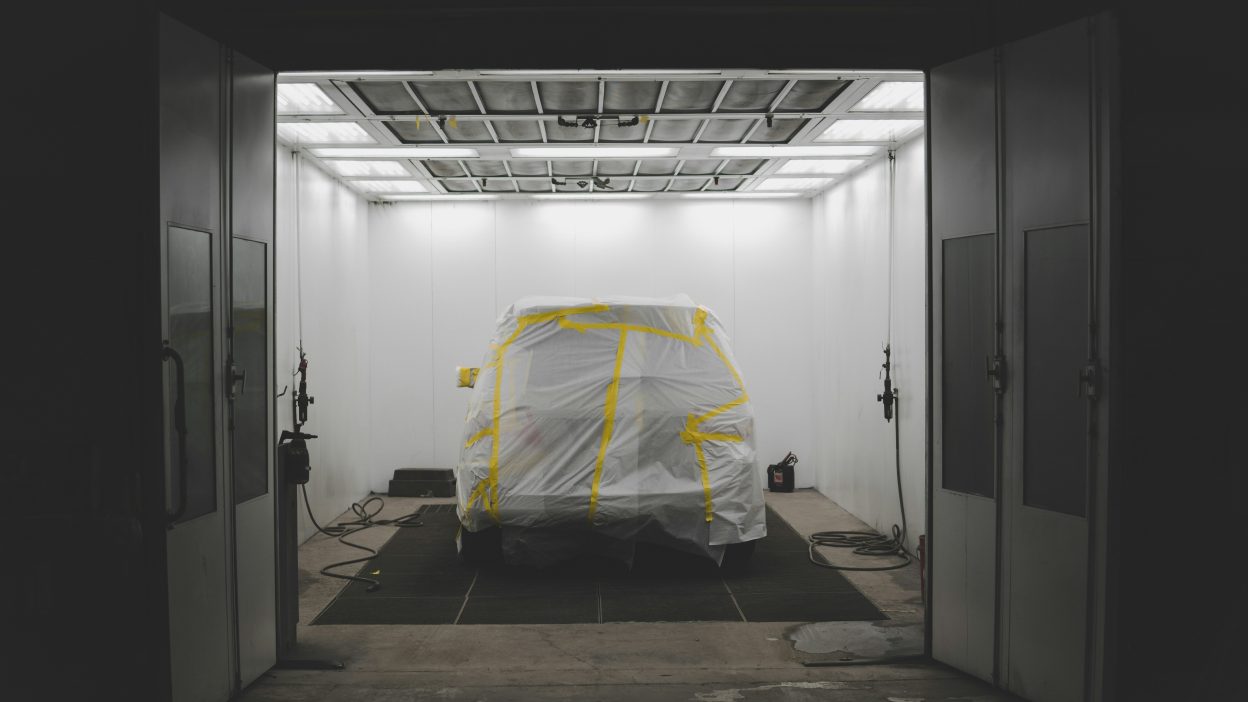
Modern collision repair shops use computerized paint matching systems to analyze your vehicle’s existing finish and formulate a precise color blend. These systems account for the age of your paint, environmental exposure, and the specific batch code from your manufacturer. However, they assume the replacement panel has the same surface characteristics as the original.
Aftermarket panels are sometimes manufactured with slightly different metal composition, texture, or primer absorption rates. When a panel absorbs primer or paint differently than surrounding panels, the final color can appear lighter, darker, or have a slightly different hue in direct sunlight. This issue becomes more pronounced on vehicles with complex metallic, pearl, or tri-coat finishes.
OEM panels are produced with the same materials and surface treatments as the original, so they respond to paint in a predictable, consistent way. Technicians using computerized systems achieve a much more seamless match when the substrate behaves as expected.
Fit, Finish, and Long-Term Durability
Beyond paint matching, the physical fit of a replacement part affects both appearance and longevity. A panel that does not align with factory specifications can create uneven panel gaps, visible to a trained eye and often noticeable to attentive car owners.
Poor fit also has practical consequences. Gaps that are too wide or too narrow can allow water intrusion, accelerate rust, and create wind noise at highway speeds. Misaligned bumpers may not properly engage the mounting clips or energy-absorbing foam beneath, reducing effectiveness in a low-speed collision.
OEM parts virtually eliminate fit-related concerns because they are engineered to the same tolerances as the components they replace. This precision supports a cleaner repair outcome and helps preserve the vehicle’s resale value.
Resale Value Considerations
Resale value is another dimension of this conversation that is easy to overlook in the stress of a collision. Vehicles repaired with OEM parts are generally viewed more favorably by buyers and appraisers. Certified pre-owned programs from major manufacturers often require that collision repairs used OEM parts in order for the vehicle to qualify.
A repair history showing aftermarket parts can raise questions for potential buyers and may result in a lower trade-in offer. For newer or higher-value vehicles, the cost difference between OEM and aftermarket parts may be outweighed by the long-term impact on the vehicle’s worth.
Ohio Law and Insurance Company Requirements
This is a question that comes up frequently among Cincinnati drivers: can my insurance company force me to accept aftermarket parts? The answer in Ohio is nuanced.
Under Ohio law, insurance companies are permitted to specify aftermarket parts in collision repair estimates, but they are not permitted to use parts that are of lesser quality than the original equipment. Ohio Revised Code Section 3937.411 governs this area. According to the statute, insurers may use non-OEM parts only if those parts are at least equal in kind and quality to the OEM part in terms of fit, quality, and performance.
In practice, this means that if an aftermarket part does not meet that standard, you have legal standing to request an OEM alternative. If your insurer is pushing back on OEM parts for a newer vehicle or a safety-related component, it is worth asking them to document the quality equivalency of the part they are specifying.
Additionally, some Ohio drivers carry OEM endorsements on their auto insurance policies. These endorsements require the insurer to pay for genuine OEM parts regardless of cost difference. If you drive a newer or higher-value vehicle, this endorsement can be a worthwhile policy addition.
The Ohio Department of Insurance is the regulatory authority you can contact if you believe your insurer is not following state requirements regarding parts quality.
When Aftermarket Parts May Be Acceptable
There are situations where aftermarket parts represent a reasonable choice. For older vehicles with high mileage, the cost of OEM parts may exceed the vehicle’s diminished market value, making an OEM repair economically impractical. In these cases, quality-certified aftermarket parts, particularly those carrying the CAPA (Certified Automotive Parts Association) seal, can be an appropriate alternative.
CAPA certification requires that parts undergo testing against OEM standards for fit, finish, corrosion resistance, and material composition. While CAPA certification does not guarantee a result identical to OEM, it provides a meaningful baseline of quality assurance.
For non-structural components on older vehicles where paint matching precision is less of a priority, certified aftermarket parts can keep repair costs manageable without significant compromise to safety or appearance.
Final Thoughts: Making the Right Call for Your Vehicle
What Cincinnati Drivers Should Take Away
The choice between OEM and aftermarket collision parts is not simply a matter of cost. It touches on repair quality, color match precision, long-term durability, resale value, and your legal rights under Ohio insurance law. For most newer vehicles and for any repair involving complex paint finishes or safety-related components, OEM parts offer a more reliable path to a repair that looks, fits, and performs the way your vehicle was designed to.
If you are evaluating repair options in the Cincinnati area, ask any shop you are considering to explain their parts sourcing policy and walk you through how their computerized paint matching process accounts for parts variability. A shop that speaks knowledgeably about this relationship takes the quality of your repair seriously.
For those who want to visit or verify a local collision repair provider in Cincinnati, you can find a trusted local shop on Google Maps to read reviews and confirm their services before scheduling an appointment.
Frequently Asked Questions
Q1: Are aftermarket collision parts safe to use?
Aftermarket parts vary widely in quality. Parts certified by CAPA or other recognized testing organizations are generally safe for non-structural applications. However, for structural components that affect crash performance, OEM parts are the more reliable choice. Always ask your repair shop to specify what certification an aftermarket part carries before approving its use.
Q2: Can I insist on OEM parts even if my insurance company specifies aftermarket?
Yes. In Ohio, you have the right to request OEM parts, though your insurer may not be required to cover the full cost difference in all circumstances. If your policy includes an OEM endorsement, your insurer must cover OEM parts. Without that endorsement, you can still request OEM parts but may need to pay the price difference out of pocket. Ohio law requires that any aftermarket part used must be equal in quality to the OEM equivalent.
Q3: How does part choice affect the paint matching process?
Replacement panels that differ from OEM in material composition or surface texture can absorb primer and paint differently than surrounding panels. This can produce subtle color variation visible in direct sunlight or at certain viewing angles. OEM panels respond to paint predictably, making computerized color matching more accurate and reliable.
Q4: What is a CAPA-certified aftermarket part?
CAPA stands for Certified Automotive Parts Association. It is an independent organization that tests aftermarket collision parts against OEM standards for fit, finish, and material quality. Parts that pass CAPA testing receive a seal of certification. While CAPA certification does not guarantee a result identical to OEM, it does provide a meaningful quality benchmark that is generally superior to uncertified aftermarket alternatives.
Q5: Does using aftermarket parts affect my vehicle’s warranty?
In most cases, using aftermarket parts for collision repair does not void your vehicle’s original manufacturer warranty, as long as the aftermarket part itself did not cause the warranty-covered failure. This is governed federally by the Magnuson-Moss Warranty Act. However, if you participate in a certified pre-owned program that requires OEM parts for repairs, using aftermarket parts could affect your eligibility under that program.