A refrigerator making a loud buzzing noise in Cincinnati, OH is one of those household problems that is easy to dismiss but hard to ignore. That persistent hum coming from the kitchen might seem harmless, but it can be an early warning sign of a failing component that puts an entire refrigerator full of groceries at risk. Understanding what different refrigerator sounds mean is the first step toward protecting both your appliance and your food supply. For homeowners dealing with unusual noises, professional Cincinnati refrigerator repair can diagnose the issue before it becomes a costly emergency.
Refrigerators are not silent machines. They cycle on and off throughout the day and produce a range of sounds as part of normal operation. But there is a clear difference between sounds that signal healthy function and those that indicate something is about to break. This guide walks through the most common refrigerator noises, explains what causes them, and helps homeowners decide when to call a repair technician.
Normal Refrigerator Sounds vs. Warning Sounds: A Quick Reference
Before assuming the worst, it helps to know what a healthy refrigerator sounds like. Refrigerators produce several sounds during regular operation, and most of them are completely harmless.
Sounds That Are Typically Normal
Low humming or buzzing: A quiet, steady hum is the sound of the compressor running. This is normal and indicates the refrigerator is actively cooling. The sound should be consistent and fade when the compressor cycles off.
Gurgling or bubbling: This is the sound of refrigerant moving through the evaporator coils. It usually happens after the compressor shuts off and sounds like water moving through pipes.
Clicking: A single click when the refrigerator starts or stops its cooling cycle is the sound of the compressor relay switching on or off. This is completely normal.
Dripping or sizzling: During the defrost cycle, ice melts off the evaporator coils and drips onto a heating element. This can cause a brief sizzling sound that stops within minutes.
Rattling (brief): Loose items on top of or inside the refrigerator can vibrate during compressor cycles. This is a simple fix that does not indicate a mechanical problem.
Sounds That Signal a Problem
Loud buzzing or humming that gets worse over time: A buzzing noise that grows louder or becomes constant often points to a failing condenser fan motor, a struggling compressor, or an issue with the water inlet valve.
Grinding or squealing: These are the most concerning sounds. Grinding typically means a fan blade is hitting ice buildup or debris, while a high-pitched squeal suggests a motor bearing is failing.
Repeated clicking without the compressor starting: If the refrigerator clicks rapidly but does not begin a cooling cycle, the compressor relay may be failing. This is a serious issue that can lead to complete cooling failure.
Rattling that is persistent and loud: Constant rattling from the back of the unit often points to a loose or failing condenser fan, while rattling from inside the freezer section may indicate a problem with the evaporator fan.
Condenser Fan Failures: What Happens When They Go Unchecked
The condenser fan is located at the back of most refrigerators, near the compressor and condenser coils. Its job is to pull air across the condenser coils to release heat from the refrigerant. When this fan starts to fail, the refrigerator loses its ability to expel heat efficiently.
A failing condenser fan often produces a buzzing, rattling, or grinding noise coming from the back of the unit. As the motor wears down, the fan may spin unevenly or stop altogether. When the condenser fan is not working properly, the compressor has to work much harder to maintain the set temperature. This leads to higher energy bills, warmer temperatures inside the refrigerator, and accelerated wear on the compressor.
If left unaddressed, a failed condenser fan can cause the compressor to overheat and seize. At that point, what started as a relatively inexpensive fan motor replacement becomes a major repair or full appliance replacement.
Signs the condenser fan may be failing:
- Buzzing or grinding from the back of the refrigerator
- The refrigerator feels warm on the outside near the back
- Food is not staying as cold as it should
- The compressor runs constantly without cycling off
Cleaning the condenser coils and fan area annually can extend the life of this component significantly. Dust and pet hair are major contributors to condenser fan failure. According to the U.S. Department of Energy, keeping condenser coils clean is one of the most effective ways to maintain refrigerator efficiency.
Evaporator Fan Failures: The Hidden Problem Inside Your Freezer
The evaporator fan is located inside the freezer compartment, behind a panel at the back wall. Its job is to circulate cold air across the evaporator coils and distribute it throughout both the freezer and fresh food sections. When this fan fails, the refrigerator section often warms up first while the freezer stays cold, which confuses many homeowners.
A failing evaporator fan typically produces a high-pitched squealing, grinding, or loud humming noise from inside the freezer section. In some cases, ice can build up around the fan blades due to a defrost system malfunction, causing the blades to scrape against the ice and create a loud grinding sound.
Signs the evaporator fan may be failing:
- Loud noise coming from inside the freezer section
- Fresh food compartment warming up even though the freezer is fine
- Ice cream and frozen foods are beginning to soften
- Opening the freezer door causes the noise to change or stop
The evaporator fan is one of the more affordable repairs on a refrigerator when caught early. Ignoring it can lead to a cascade of failures as the compressor compensates for the loss of airflow.
When a Noisy Compressor Signals a Repair-or-Replace Decision
The compressor is the heart of the refrigerator’s cooling system. It pressurizes the refrigerant and pumps it through the system to create the cooling effect. A properly working compressor produces a low, steady hum. When that hum becomes loud, erratic, or is accompanied by clicking and vibration, it is time to pay attention.
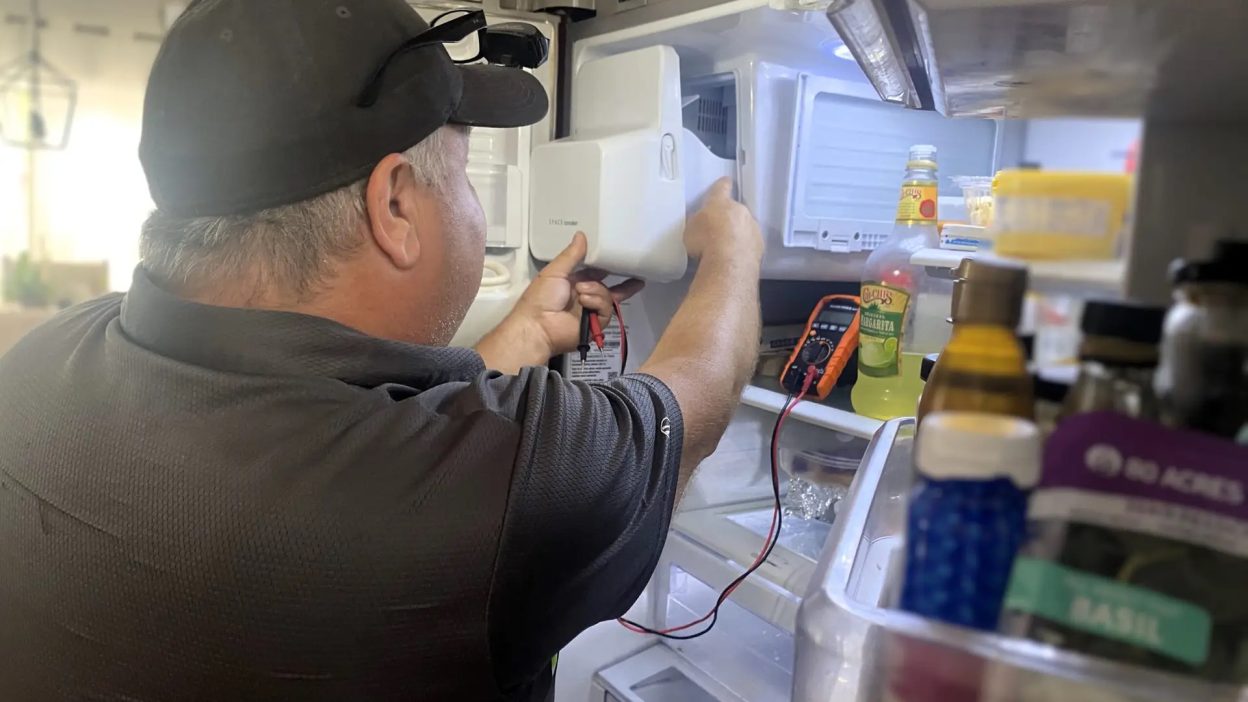
A loud buzzing that seems to come from the bottom or back of the refrigerator, especially when combined with inadequate cooling, often points to a struggling compressor. Compressors can fail gradually or suddenly. A technician can use diagnostic tools to test whether the compressor is drawing the right amount of current and functioning within normal parameters.
Compressor repairs are among the most expensive refrigerator repairs available. The cost of a replacement compressor, plus labor, can easily reach $400 to $600 or more depending on the refrigerator model. For older appliances, that cost may exceed half the price of a new refrigerator.
This is where the repair-or-replace decision becomes critical. As a general guideline, if the refrigerator is more than 10 years old and the repair cost exceeds 50% of the replacement cost, replacement is usually the smarter financial choice. A qualified appliance technician can assess the unit and provide an honest recommendation based on the age, condition, and value of the appliance.
For more detailed guidance on how to weigh this decision across multiple appliances, resources from Consumer Reports on appliance reliability offer useful data on average appliance lifespans and repair cost thresholds.
Practical Steps Homeowners Can Take Before Calling a Technician
While most refrigerator noise issues require professional diagnosis and repair, there are a few things homeowners can do to rule out simple causes before making a service call.
Check that the refrigerator is level. An uneven refrigerator can vibrate and rattle significantly. Use a level tool and adjust the front legs until the unit sits flat.
Pull the refrigerator away from the wall. Items stored on top or behind the unit can vibrate and create noise that sounds internal. Clearing the area often resolves mysterious rattling.
Clean the condenser coils. Using a vacuum with a brush attachment, clear dust and debris from the coils at the back or bottom of the refrigerator. This simple step can reduce strain on the fan and compressor.
Check the drain pan. The drain pan beneath the refrigerator can vibrate if it has shifted out of position. Sliding it back into place often eliminates rattling sounds.
Listen for patterns. Note whether the noise happens when the compressor first starts, during the defrost cycle, or constantly. This information is valuable for a repair technician.
Wrapping It All Up: What Your Refrigerator Is Trying to Tell You
A refrigerator making a loud buzzing noise is communicating that something needs attention. Whether it is a simple fix like cleaning the condenser coils or a more significant repair like replacing a fan motor, early action almost always leads to a lower repair bill and a better outcome. Knowing the difference between a normal operational hum and a warning sound gives homeowners the knowledge to act before a minor issue becomes a major loss.
For residents in the Cincinnati area dealing with persistent or worsening refrigerator noise, local appliance repair professionals can provide an accurate diagnosis and clear repair options. Most refrigerator fan motor replacements are completed in a single visit, making early intervention both practical and cost-effective.
Taking care of a noisy refrigerator is not just about the appliance. It is about protecting the food inside it, keeping energy costs under control, and extending the life of a major household investment.
Frequently Asked Questions
1. Is it normal for a refrigerator to buzz?
A low, steady buzzing or humming is normal and indicates the compressor is running. If the buzzing is loud, erratic, or has changed recently, it is worth investigating further. Sudden changes in noise level are usually a sign that something has changed mechanically.
2. What causes a refrigerator to make a loud humming noise?
Common causes include a failing condenser fan motor, a failing evaporator fan motor, a struggling compressor, or a malfunctioning water inlet valve. Each of these components can produce a distinct sound, and a technician can pinpoint the source through inspection and testing.
3. Can I still use my refrigerator if it is making a loud noise?
In many cases, yes, but with caution. If the refrigerator is still maintaining proper temperatures (below 40 degrees Fahrenheit in the fresh food section and 0 degrees Fahrenheit in the freezer), it is likely still functioning. However, a loud noise often means a component is failing, and it is best to have it inspected promptly.
4. How long does a refrigerator compressor last?
Most refrigerator compressors last between 10 and 15 years under normal operating conditions. Regular maintenance, including cleaning condenser coils and ensuring proper ventilation around the unit, can help extend compressor life.
5. How much does it cost to repair a loud refrigerator?
Repair costs vary widely depending on the cause. A condenser or evaporator fan motor replacement typically ranges from $150 to $300 including parts and labor. Compressor replacement is significantly more expensive, often ranging from $400 to $700 or more. Getting a professional diagnostic before committing to a repair helps ensure the investment makes financial sense.
6. When should I replace my refrigerator instead of repairing it?
If the refrigerator is older than 10 to 12 years and the repair cost exceeds half the price of a comparable new unit, replacement is usually the better choice. A technician can help assess the overall condition and provide a recommendation based on the specific repair needed.