
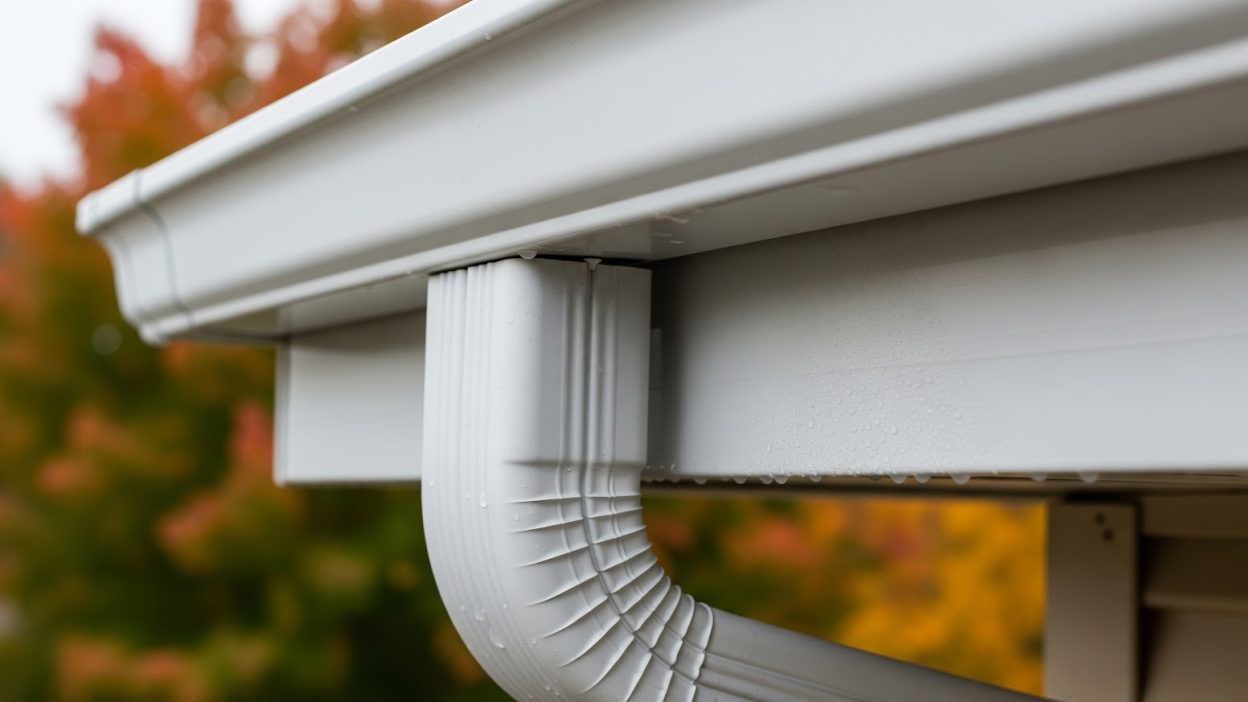
If you have ever noticed water pooling near your foundation after a rainstorm, your downspouts may be the culprit. Knowing how far should downspouts extend from house in Cincinnati, OH is one of the most overlooked yet impactful aspects of home maintenance. Proper gutter downspout installation and extension can mean the difference between a dry basement and thousands of dollars in water damage repairs. This guide covers the minimum recommended distances, the best extension options, and the warning signs that your current setup is not doing its job.
Why Downspout Distance Matters More Than You Think
Downspouts are the vertical pipes that carry rainwater from your gutters down to ground level. Their job does not end there, however. Where that water goes once it hits the ground is just as important as collecting it in the first place.
When a downspout deposits water directly at the base of your home, the soil becomes saturated. Over time, that moisture works its way through foundation cracks, into crawl spaces, and eventually into basements. According to the American Society of Home Inspectors, improper grading and drainage are among the leading contributors to foundation and basement moisture problems in residential homes.
The consequences are not just cosmetic. Persistent moisture at the foundation can cause:
- Hydrostatic pressure that cracks concrete and masonry
- Mold and mildew growth inside walls and crawl spaces
- Erosion of the soil that supports your home’s footings
- Damage to landscaping, flower beds, and hardscaping near the home
Understanding the right distance for downspout discharge is a simple but powerful step toward protecting your home’s structural integrity.
The 4 to 6 Foot Minimum Rule
Most building professionals and drainage experts recommend that downspouts extend at least 4 to 6 feet away from the foundation. This distance gives water enough room to disperse into the surrounding soil before it can seep back toward the house.
The International Residential Code (IRC) requires that surface drainage be directed away from the foundation, though specific distances can vary by jurisdiction. Many contractors and home inspectors use 6 feet as their practical standard to provide a reasonable buffer in most soil conditions.
Why Cincinnati’s Clay Soil Makes This Even More Critical
Homeowners in the Cincinnati, OH area face a particular challenge: the region sits on a dense layer of clay-heavy soil. Unlike sandy or loamy soils that absorb and drain water relatively quickly, clay soil is nearly impermeable. When it gets wet, it holds moisture for extended periods and expands in volume.
This expansion creates lateral pressure against foundation walls. When clay soil dries out, it contracts and pulls away from the foundation, leaving gaps where water can enter during the next rain event. For Cincinnati homeowners, the 4-foot minimum is rarely enough. Targeting 6 to 10 feet of extension is a smarter approach given local soil conditions.
The University of Kentucky Cooperative Extension Service notes that clay soils in the Ohio River Valley region are among the most problematic for residential drainage, and they specifically recommend generous downspout extensions and proper grading as first-line defenses.
Downspout Extension Options Compared
There is no one-size-fits-all solution for extending downspouts. The best option depends on your yard’s layout, slope, and how much water your gutters typically handle. Here is a look at the most common approaches.
Splash Blocks
Splash blocks are simple, inexpensive concrete or plastic trays placed at the base of the downspout. They redirect water away from the foundation and help slow its velocity to reduce erosion.
Pros: Low cost, easy to install, no tools required.
Cons: They typically only move water 1 to 2 feet from the house, which falls well short of the recommended minimum. They can also shift out of place over time and may not handle heavy rainfall volumes effectively.
Splash blocks are best used as a temporary solution or in conjunction with other methods.
Flexible Hose Extensions
Flexible corrugated plastic extensions attach directly to the bottom of the downspout elbow and can stretch several feet away from the house. Some styles roll up when not in use and extend automatically when water flows through them.
Pros: Affordable, available at most hardware stores, easy to install.
Cons: Roll-out styles can be damaged by lawn mowers or foot traffic. Fixed extensions can look unsightly and may be tripped over. They also require periodic checking to make sure they have not kinked or been dislodged.
For homeowners who want a quick and budget-friendly upgrade, flexible extensions are a solid step up from splash blocks alone.
Underground Drain Tile
For a more permanent and invisible solution, underground drain tile systems route water from the downspout through buried PVC pipe to a discharge point further in the yard. This keeps your lawn looking tidy and moves water far beyond the foundation zone.
Pros: Highly effective, invisible once installed, can handle large volumes of water, long-lasting.
Cons: Higher upfront cost, requires digging a trench, and should be installed with proper slope (typically 1 inch of drop per 10 feet of pipe) to function correctly. Debris screens at entry points are recommended to prevent clogging.
Underground systems are the preferred option for homes with recurring drainage problems or limited yard space where surface extensions are impractical.
Pop-Up Emitters
Pop-up emitters are often paired with underground drain tile. They are installed at the end of the buried pipe and remain closed when water is not flowing. When runoff from a storm pushes water through the system, the emitter cap opens and releases the water onto the lawn or garden area away from the house.
Pros: Keeps the discharge point clean and free of debris when not in use, prevents animals from nesting in the pipe, provides a neat and professional finish.
Cons: Requires the same installation effort as an underground drain tile system.
Pop-up emitters are a great finishing touch for any underground drainage project and are particularly popular in Cincinnati neighborhoods where curb appeal matters.
Signs Your Current Downspout Setup Is Failing
Not sure whether your downspouts are doing their job? These are the warning signs that something needs to change.
Pooling Water Near the Foundation
After a moderate or heavy rain, walk around your home’s perimeter. If you see standing water within 3 to 4 feet of the foundation, your downspouts are not moving water far enough. This pooling is especially concerning if it persists for more than a few hours after the rain ends.
Efflorescence on Basement Walls
Efflorescence is the white, chalky mineral residue that appears on concrete or masonry surfaces when water moves through them and evaporates. If you notice white streaks or powder on your basement walls, it is a strong indicator that moisture is consistently seeping through the foundation. Improper downspout drainage is one of the primary causes.
Landscaping Washout
Downspouts that discharge too close to garden beds, mulch areas, or sloped terrain will erode the soil over time. If you notice channels cut into your mulch, bare patches in your lawn near the house, or plants that seem consistently waterlogged, your downspout placement is likely contributing to the problem.
Cracks in the Foundation
While foundation cracks can have multiple causes, horizontal cracks in block foundations and diagonal cracks near corners are frequently associated with lateral soil pressure, which improper drainage worsens significantly.
Basement Odors or Humidity
A musty smell in the basement, even without visible water intrusion, can signal that moisture is penetrating through the foundation or floor slab. High indoor humidity levels are often traced back to exterior drainage deficiencies.
Grading: The Other Half of the Equation
Even perfectly placed downspout extensions will underperform if your yard’s grade works against you. The soil around your foundation should slope away from the house at a rate of at least 6 inches over the first 10 feet. This positive grading ensures surface water from rain and snowmelt flows away from the structure rather than toward it. Soil naturally settles over time, especially around newer construction, so checking and correcting grade every few years is a worthwhile habit.
Wrapping It All Up: Protect Your Home From the Ground Up
Proper downspout extension is one of the most cost-effective improvements a homeowner can make. Whether you opt for a flexible hose extension for a quick fix or invest in an underground drain tile system with pop-up emitters for a permanent solution, the goal is the same: get water at least 4 to 6 feet away from your foundation, and further if you are dealing with Cincinnati’s clay-heavy soil conditions.
Inspect your current setup after the next significant rainfall, look for the warning signs covered in this article, and act before minor moisture issues become major structural problems. For homeowners wanting a professional assessment, a qualified gutter and drainage specialist familiar with local soil conditions can evaluate your system and recommend the right solution.
Small changes to how your downspouts discharge can have a dramatic impact on the long-term health of your home’s foundation and basement.
Frequently Asked Questions
Q: How far should downspouts extend from the house at a minimum?
A: The general industry standard is a minimum of 4 to 6 feet from the foundation. However, homes in areas with clay-heavy soil, like much of Cincinnati, OH, benefit from extensions of 6 to 10 feet or more to account for the soil’s poor drainage characteristics.
Q: Can I use multiple extension types together?
A: Yes, and it is often a good idea. A flexible hose extension can connect to the downspout and feed into an underground drain tile system that terminates with a pop-up emitter, combining the benefits of each approach.
Q: How do I know if my downspout extension is clogged?
A: Signs of a clog include water overflowing at the connection point, water backing up near the foundation, or a pop-up emitter that no longer opens during rain. Flushing the system with a garden hose can clear minor blockages.
Q: Does downspout extension length affect gutter performance?
A: The extension itself does not affect how the gutters collect water, but if the extension is blocked or improperly sloped, water can back up and create pressure in the downspout, which may eventually affect gutter function. Keeping extensions clear and properly sloped protects the entire system.
Q: Is it necessary to hire a professional for downspout extensions?
A: Simple extensions like flexible hose or splash blocks are DIY-friendly. Underground drain tile systems require accurate slope calculations and trenching that is best handled by a professional, especially in areas with clay soil. A professional can also ensure the discharge point complies with local stormwater ordinances.