If you own a tankless water heater, you already know the benefits: on-demand hot water, lower energy bills, and a longer lifespan than traditional tank units. But there is one maintenance task that many homeowners overlook entirely, and skipping it can cost you hundreds of dollars in repairs or even a full replacement. Knowing how often to flush a tankless water heater in Cleveland, OH is not just a matter of good practice. It is a necessity, especially given the area’s notoriously hard water supply. If you are searching for reliable tankless water heater services, understanding what descaling involves will help you make smarter decisions about your home’s plumbing system.
This guide breaks down everything you need to know about flushing frequency, what happens when you skip it, how to do a basic vinegar flush, and why Cleveland homeowners need to pay extra attention to their water quality.
Why Flushing a Tankless Water Heater Matters
Unlike traditional storage tank heaters, tankless units heat water on demand by passing it through a heat exchanger. When hard water flows through this exchanger repeatedly, dissolved minerals like calcium and magnesium carbonate precipitate out and stick to the internal components. Over time, this buildup, commonly called scale or limescale, accumulates into a thick, insulating layer.
According to the U.S. Department of Energy, scale buildup directly reduces the efficiency of water heating systems. Even a relatively thin layer of mineral deposits forces the unit to work harder to transfer heat, which increases energy consumption and accelerates wear on internal parts.
Flushing the unit removes this buildup before it becomes a serious problem.
What Happens If You Never Flush a Tankless Water Heater?
Neglecting routine descaling is one of the most common reasons tankless water heaters fail prematurely. Here is what you can expect if the unit goes unflushed for years:
Efficiency Loss
Limescale acts as thermal insulation inside the heat exchanger. The thicker it gets, the harder the unit has to work to bring water up to temperature. Homeowners often notice higher gas or electric bills before they realize the water heater is the culprit. Studies from the Water Quality Research Foundation have shown that scale buildup in water heaters can increase energy consumption by as much as 30 percent in severely neglected units.
Error Codes and Performance Issues
Most modern tankless water heaters are equipped with diagnostic sensors. When mineral buildup reaches a critical level, the unit will trigger error codes indicating overheating, flow restriction, or heat exchanger failure. Brands like Rinnai, Navien, and Rheem all have specific fault codes tied to scale-related issues. Intermittent hot water, sudden cold bursts mid-shower, and pressure drops are early warning signs that scale has become a problem.
Voided Manufacturer Warranty
This is the part that surprises most homeowners. Nearly every major tankless water heater manufacturer includes language in their warranty documentation requiring periodic descaling as part of routine maintenance. Failing to flush the unit at recommended intervals can void the warranty entirely, leaving you responsible for the full cost of repairs or replacement. Always review your owner’s manual or manufacturer website to confirm the specific maintenance schedule your warranty requires.
Shortened Equipment Lifespan
A properly maintained tankless water heater can last 20 years or more. Without regular flushing, that lifespan can be cut in half. Severe scale damage to the heat exchanger often requires a complete unit replacement, which typically costs between $1,000 and $3,500 installed.
How Cleveland’s Hard Water Changes Everything
Cleveland’s water supply comes primarily from Lake Erie, treated by the Cleveland Division of Water. While the treatment process removes contaminants, it does not eliminate naturally occurring minerals. According to data from the Cleveland Water Alliance, water hardness in the Greater Cleveland area typically falls in the range of 120 to 180 parts per million (ppm), which classifies as moderately hard to hard by the Water Quality Association’s standards.
By comparison, the general industry recommendation for flushing a tankless water heater is once per year for areas with soft to moderate water hardness (under 120 ppm). Cleveland’s water hardness levels push most households into a more aggressive maintenance schedule.
Annual Flushing: Suitable for homeowners in Cleveland suburbs where water hardness stays closer to the 120 ppm threshold, or for households that have installed a whole-home water softener or inline filter upstream of the water heater.
Every Six Months: Recommended for most Cleveland city residents and those in surrounding communities where water hardness regularly exceeds 150 ppm. If your fixtures show frequent white mineral deposits, or if your dishwasher or coffee maker builds up scale quickly, those are signs that your water is on the harder end and your tankless heater needs more frequent attention.
Installing a water softener or a dedicated scale inhibitor filter can reduce flushing frequency and extend the time between descaling sessions. However, even softened water benefits from annual flushing since no filtration system removes 100 percent of dissolved minerals.
Step-by-Step Overview of the Vinegar Flush Process
Flushing a tankless water heater involves circulating a diluted acid solution, most commonly white vinegar, through the heat exchanger to dissolve mineral deposits. Here is a general overview of how the process works.
What You Will Need
You will need a submersible pump, two hoses (usually garden hoses or washing machine hoses), a five-gallon bucket, approximately three gallons of food-grade white vinegar, and the isolation valves that came with your unit. Many manufacturers sell flush kits specifically designed for this purpose.
Step 1: Shut Off the Power and Gas
Before doing anything, turn off the power supply to the water heater. If it is a gas unit, switch the gas valve to the off or pilot position. Never attempt any maintenance on a unit that is still energized.
Step 2: Close the Hot and Cold Water Shutoff Valves
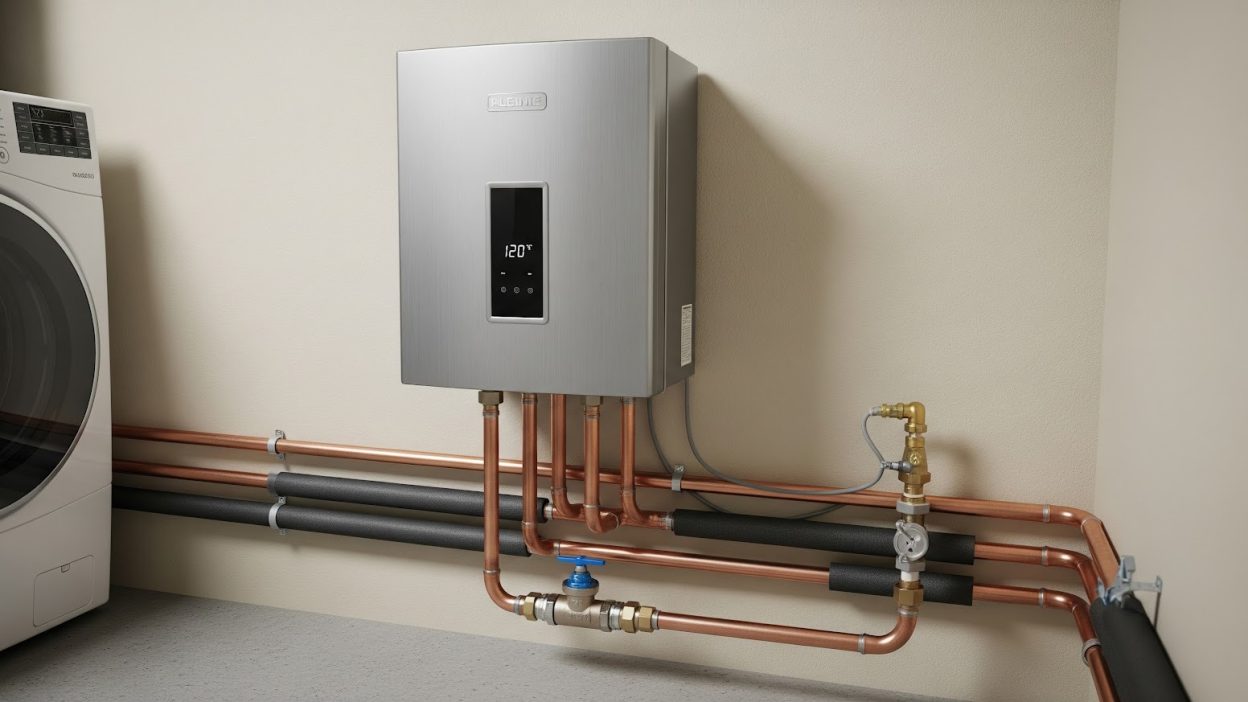
Most tankless installations include dedicated service valves on both the cold water inlet and the hot water outlet. Close both of these to isolate the heater from the rest of your home’s plumbing.
Step 3: Connect the Flush Kit
Attach one hose from the submersible pump in your bucket to the cold water service port. Run a second hose from the hot water service port back into the same bucket. This creates a closed loop that continuously circulates the vinegar solution through the heat exchanger.
Step 4: Open the Service Ports and Run the Pump
Fill the bucket with vinegar, open the service port valves, and turn on the submersible pump. Let the solution circulate for 45 minutes to one hour. The acidic vinegar dissolves calcium and magnesium deposits as it flows through the system.
Step 5: Flush with Clean Water
After the vinegar cycle is complete, drain the bucket, fill it with clean water, and run the pump for an additional 10 to 15 minutes to rinse any remaining vinegar from the heat exchanger.
Step 6: Reassemble and Restart
Close the service ports, reconnect the water supply, turn the power and gas back on, and check for any leaks before returning the unit to regular service.
When to Call a Professional Instead of DIY
While the vinegar flush process is manageable for a confident DIYer, there are situations where professional service is the smarter choice. If your unit has not been flushed in several years, the scale buildup may be too severe for a standard vinegar flush to address. If you notice error codes that persist after flushing, hear unusual sounds from the heat exchanger, or see corrosion around fittings or connections, those are signs that professional inspection is warranted. Additionally, if your unit is still under warranty, having a licensed plumber perform the service creates a documented maintenance record that can protect your warranty coverage.
For Cleveland-area homeowners who want professional descaling and a full system check, you can find local tankless water heater specialists who are familiar with the area’s water quality challenges.
Wrapping It All Up: Protecting Your Tankless Investment
Flushing a tankless water heater is not glamorous maintenance, but it is one of the most cost-effective things you can do to protect a major home investment. In Cleveland, where hard water is a daily reality, annual flushing is the bare minimum, and many households will benefit from descaling every six months. The consequences of neglect are real: higher energy bills, persistent error codes, voided warranties, and ultimately a premature unit failure that costs far more than any maintenance visit would have.
Whether you choose to tackle the vinegar flush yourself or bring in a licensed plumber for professional descaling, the key is consistency. Mark it on your calendar, set a reminder, or ask your plumber to schedule it as part of a routine service visit. Your water heater, and your wallet, will thank you.
Frequently Asked Questions
How often should I flush my tankless water heater if I have a water softener?
If you have a properly functioning whole-home water softener, you can typically extend flushing intervals to once per year regardless of your local water hardness. However, annual maintenance is still recommended to address any minor buildup and to inspect the unit’s components for wear.
Can I use anything other than white vinegar for the flush?
Yes. There are commercial descaling solutions formulated specifically for tankless water heaters, and these products are often more effective than vinegar for heavy buildup. Products like Rinnai’s descaler or third-party solutions approved by your unit’s manufacturer are good options. Avoid using harsh acids or products not designed for plumbing systems.
How long does a professional tankless water heater flush take?
A professional descaling service typically takes between one and two hours, depending on the severity of the buildup and whether additional inspection or repairs are needed. The actual flushing cycle is usually 45 to 60 minutes, with setup and reassembly adding extra time.
What are the signs that my tankless water heater needs flushing right now?
Common indicators include inconsistent hot water temperatures, longer wait times for hot water to arrive at fixtures, increased energy bills without a clear cause, visible mineral deposits on faucets or fixtures throughout the home, and error codes or warning lights on the unit’s display panel.
Is flushing a tankless water heater required by building codes in Ohio?
Ohio building codes do not specifically mandate a flushing schedule for tankless water heaters. However, most manufacturer warranties do require documented routine maintenance, which typically includes periodic descaling. Failing to maintain the unit according to the manufacturer’s guidelines can void warranty coverage and may affect insurance claims in the event of a water heater-related loss.