Making smart decisions about your home’s doors requires weighing several important factors, and knowing when to pursue door repair or replacement in Cincinnati, OH can save you significant time and money in the long run. Doors serve as the primary barrier between your home and the outside world, providing security, insulation, and curb appeal all at once. When damage occurs, many homeowners are left wondering whether a repair will hold up over time or if investing in a full replacement is the more practical solution. The answer depends on the type of damage, the age of the door, and the long-term value you want to get from your investment. Working with a trusted door repair and installation professional is one of the most reliable ways to assess your specific situation and get guidance tailored to your home.
Understanding the distinction between a door that needs minor attention and one that has reached the end of its useful life is not always straightforward. Factors like moisture damage, structural warping, broken hardware, and outdated insulation can all affect whether repair or replacement is the better course of action. This guide will walk you through the key signs to watch for, how costs compare, and why professional services make all the difference when it comes to long-term results.
Signs Your Door Can Be Repaired vs. When Replacement Is Needed
Not every damaged door requires a full swap-out, and recognizing the difference between surface-level problems and deeper structural issues is the first step toward making the right call. Minor repairs are often sufficient when the damage is isolated and has not compromised the door’s core functionality or integrity. Understanding what separates a fixable door from one that needs to be replaced can help you avoid both overspending and underinvesting.
When repair is likely sufficient:
- Minor cosmetic damage: Scratches, dents, or small chips in a door’s surface are typically cosmetic in nature and can be repaired with filler, sanding, and repainting without compromising the door’s structural integrity. These types of issues are especially common with exterior doors exposed to the elements over time.
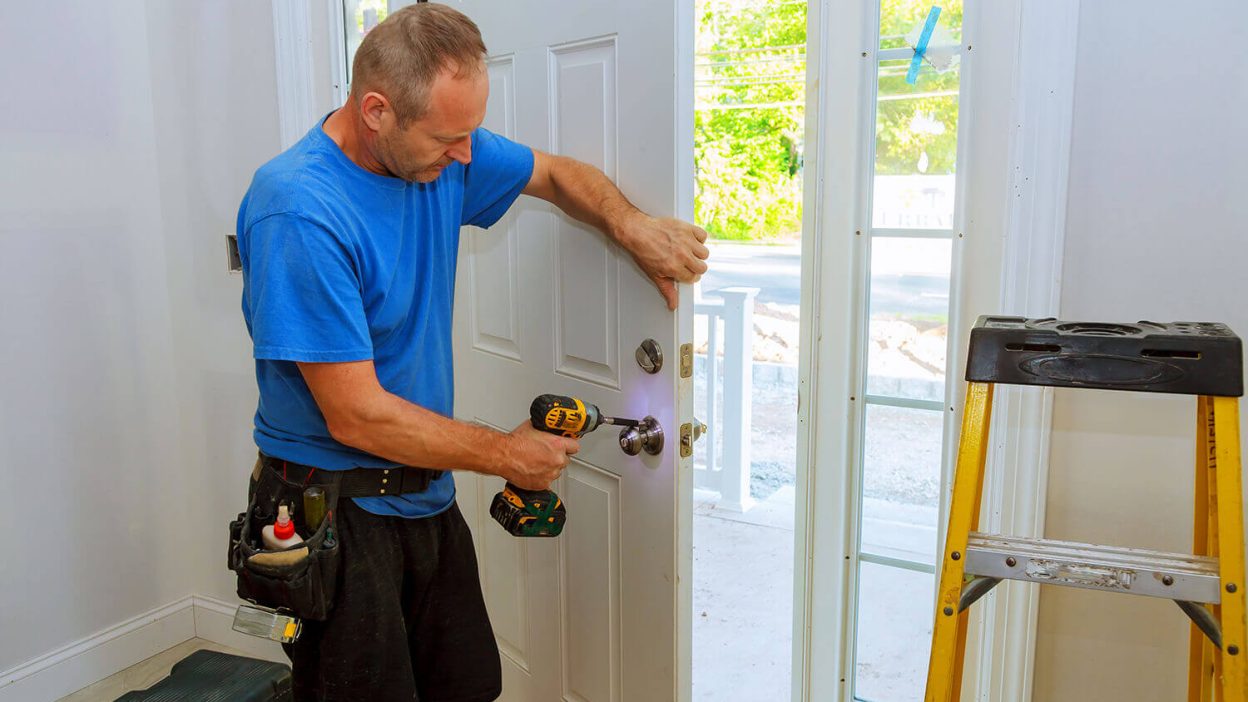
- Hardware failure: If your door sticks, does not latch properly, or has a broken handle or lock, the issue is most likely with the hardware rather than the door itself. Replacing hinges, strike plates, and locksets is a cost-effective fix that restores both security and usability.
- Minor weatherstripping wear: Drafts around a door are often the result of worn or damaged weatherstripping, which is one of the simplest and least expensive repairs a homeowner can make. Replacing the weatherstripping restores the door’s ability to seal properly and can noticeably reduce heating and cooling costs.
- Small frame cracks: Hairline cracks in a wooden door frame that have not spread significantly can often be filled and reinforced by a professional, extending the life of your existing setup without a full replacement.
When replacement is the better option:
- Severe warping or rot: Wood doors that have warped extensively due to moisture exposure, or that show signs of deep rot throughout the frame or panel, have lost their structural effectiveness. Attempting to repair a severely warped or rotted door is often a short-term fix that will lead to recurring problems.
- Repeated security failures: If a door no longer closes or locks reliably despite hardware repairs, it may indicate the frame or door itself has shifted beyond the point of practical adjustment. A door that cannot be secured is a liability that warrants full replacement.
- Poor energy efficiency despite repairs: Older doors, particularly those with single-pane glass or minimal insulation, may continue to allow significant heat transfer even after weatherstripping and seal repairs. In these cases, upgrading to a modern energy-efficient model is likely to deliver better long-term value, as noted by the U.S. Department of Energy on door energy efficiency.
- Storm or impact damage: Doors that have been struck by debris, broken in during a storm, or damaged in a vehicle incident often sustain damage that goes beyond surface level. Structural damage to the door slab or frame typically calls for replacement rather than repair.
Cost Comparison Between Door Repair and Full Replacement
One of the most significant factors homeowners weigh when deciding between repair and replacement is cost. While repair is almost always the less expensive option upfront, it is not always the most cost-effective choice over time. Understanding the full picture of what each path involves financially will help you make a more informed decision.
Door repairs can range widely in price depending on the nature of the problem. Weatherstripping replacement and hardware repairs typically cost between $75 and $300, making them affordable fixes that deliver immediate results. More involved repairs such as frame patching, hinge realignment, or panel restoration can run anywhere from $150 to $600 depending on the extent of the work and the materials involved. According to HomeAdvisor’s door repair cost guide, most homeowners spend between $100 and $400 on standard door repairs, though more complex jobs naturally cost more.
Full door replacement involves a broader range of costs that include both materials and labor. An entry door replacement can cost anywhere from $500 to over $2,000 depending on the door material, style, and energy efficiency rating. Premium options such as fiberglass, steel, and solid hardwood doors tend to cost more upfront but offer considerably longer lifespans and better insulation performance. When factoring in the long-term savings from improved energy efficiency and reduced maintenance, replacement often delivers a stronger return on investment for older, frequently repaired doors. The key question to ask yourself is whether the cumulative cost of repeated repairs is approaching or exceeding the cost of a replacement, which is a strong signal that it is time to move forward with a new door.
It is also worth considering the potential boost to your home’s value. Exterior door replacement consistently ranks among the home improvement projects with the highest return on investment, often recouping 60 to 70 percent of the project cost in added resale value, according to Remodeling Magazine’s Cost vs. Value Report. This added value is particularly relevant for homeowners who are planning to sell in the coming years and want to make improvements that will resonate with buyers.
Benefits of Professional Door Repair and Installation Services
Whether you are repairing a damaged door or installing a brand-new one, the quality of the workmanship makes an enormous difference in the final result. DIY approaches may seem appealing for cost savings, but improper installation or repair can lead to security vulnerabilities, energy inefficiency, and premature wear that ends up costing more in the long run. Partnering with a licensed professional ensures the job is done correctly the first time.
Professional technicians bring both the tools and the expertise required to properly assess and address door issues at every level. They can identify problems that are not immediately visible, such as subtle frame misalignment, hidden rot beneath a painted surface, or inadequate flashing around the door frame that allows moisture infiltration. Catching these issues early with the help of a trained eye can prevent far more costly repairs down the road and extend the overall lifespan of your door system.
When it comes to installation, precision is everything. A door that is installed even slightly out of plumb or square will experience uneven wear, difficulty latching, and reduced energy efficiency over time. Professional installers use calibrated tools and follow manufacturer specifications to ensure a perfect fit, which is especially important for energy-efficient doors that rely on tight seals to perform as rated. This level of accuracy is difficult to replicate with a DIY approach, regardless of your skill level.
Professionals also provide guidance on material and product selection that can save you from costly mistakes. Choosing the right door material for your climate, home style, and security needs is a nuanced process that benefits from experience. A knowledgeable contractor can help you navigate options like fiberglass, steel, and wood to find the solution that best fits your priorities and budget. For Cincinnati-area homeowners looking for trusted guidance, visiting a verified local professional is a great starting point for evaluating your options with someone who knows the local climate and building standards.
Finally, professional services typically come with warranties on both labor and materials, giving you an added layer of protection and peace of mind. If an issue arises after the work is completed, you have recourse through the contractor’s guarantee rather than starting over from scratch at your own expense. This accountability is one of the most undervalued benefits of working with a reputable professional rather than attempting to handle significant door work on your own.
Making the Right Decision for Your Home
The decision between door repair and replacement ultimately comes down to a careful assessment of the damage, the door’s age, your energy efficiency goals, and the long-term value you want to protect. Minor, isolated issues almost always favor repair, while structural damage, persistent energy loss, and aging doors often favor replacement. Neither answer is universal, which is why consulting with a professional who can evaluate your specific situation is always the wisest starting point.
When you treat your doors as the long-term investments they are, you make decisions that protect your home’s safety, comfort, and resale value for years to come. Whether you are dealing with a sticky entry door, a rotted frame, or a door that simply no longer reflects the quality of your home, there is a solution that fits your needs and your budget. Taking the time to understand your options before committing to either path ensures you get the most from every dollar you invest.
Final Thoughts on Door Repair vs. Replacement
Your home’s doors do more than provide an entry point. They define your home’s security, energy performance, and visual impression from the street. Understanding when a repair is the right call and when a full replacement delivers better value is a skill that comes from knowing what to look for and who to ask. The guidance outlined in this article gives you a strong foundation for evaluating your doors honestly and making decisions based on long-term value rather than short-term cost alone.
Homeowners who take a proactive approach to door care, addressing small issues before they become large ones and replacing aging doors before they become security or energy problems, are the ones who consistently get the most from their home improvement investments. If you are unsure where your door stands, a professional inspection is always a worthwhile first step.
Frequently Asked Questions
Q1: How do I know if my door needs repair or full replacement?
The best way to determine whether repair or replacement is appropriate is to assess the extent and type of damage. If the damage is limited to hardware, weatherstripping, or surface cosmetics, repair is usually sufficient. However, if the door has significant warping, deep rot, structural damage from an impact, or persistent energy inefficiency that repairs have not resolved, replacement is likely the smarter long-term investment. A professional inspection can provide a definitive answer based on the specific condition of your door.
Q2: How much does it typically cost to repair a door?
Door repair costs vary depending on what needs to be fixed. Basic hardware repairs or weatherstripping replacement can cost as little as $75 to $200, while more extensive work such as frame repair or panel restoration may run from $300 to $600 or more. If the cumulative cost of repairs is approaching the price of a new door, replacement often becomes the more economical choice in the long run.
Q3: What type of door material is best for energy efficiency?
Fiberglass doors are widely considered one of the most energy-efficient options available because they provide excellent insulation and are resistant to warping, denting, and rust. Steel doors with foam insulation cores also perform very well in terms of energy efficiency and security. Wood doors offer natural insulation but require more maintenance to keep their seals intact over time. The best choice depends on your climate, budget, and aesthetic preferences.
Q4: Can I replace a door myself, or should I hire a professional?
While handy homeowners can handle minor repairs like replacing hardware or weatherstripping, full door installation is a job that is best left to a professional. Improper installation can result in security vulnerabilities, air leaks, water infiltration, and premature wear. A licensed installer ensures the door is properly plumbed, level, and sealed according to manufacturer specifications, which is essential for both performance and warranty validity.
Q5: How often should exterior doors be inspected for damage?
Exterior doors should be inspected at least once a year, ideally before the winter season when temperature changes and moisture exposure are at their peak. During your inspection, look for gaps in the weatherstripping, difficulty latching or locking, visible warping or swelling of the door slab, and any signs of moisture infiltration around the frame. Catching minor issues early is the most effective way to avoid more costly repairs or premature replacement.
Q6: Does replacing an exterior door increase home value?
Yes. Exterior door replacement is consistently ranked as one of the higher-return home improvement projects according to industry data. A new, attractive, and energy-efficient door improves curb appeal, boosts security, and signals to potential buyers that the home has been well maintained. The combination of aesthetic and functional improvements makes door replacement one of the more impactful upgrades a homeowner can make before listing a property.